Imagine a bustling marketplace or a packed warehouse where the hum of activity never ceases—a frenetic dance of goods coming and going, while shopkeepers and managers scramble to keep track of each item.Historically, this scene represented endless challenges for businesses striving to balance supply and demand in a world lacking the sophisticated tools we take for granted today. Before the advent of inventory management software, business operations were akin to navigating a labyrinth with a flickering candle—plagued by inefficiencies, human errors, and time-consuming manual processes. Every inventory transaction required meticulous record-keeping, often maintained with hardcopies or basic spreadsheets, both of which were prone to mistakes and delays. The introduction of inventory management systems marked a pivotal shift, transforming how businesses operate and setting the stage for the integrated technologies of today's digital age.
Evolution of Inventory Management Systems
To trace the evolution of inventory management systems is to follow a journey from simplistic beginnings to the awe-inspiring digital solutions in use today. In the early days, businesses relied heavily on manual methods, scribbling notes on paper or using rudimentary spreadsheets to track stock levels. These methods, though revolutionary for their time, were often fraught with inaccuracies and inefficiencies. However, as the digital revolution took hold, the 1980s and 1990s introduced the first glimpses of automation with stand-alone inventory software solutions. These not only reduced the dependency on human calculations but also provided a foundational structure for what would come next. As businesses expanded globally, the early 2000s saw the emergence of networked systems capable of addressing the complexities of modern supply chains. Fast forward to today, where sophisticated software, incomparable to its predecessors, offers real-time data analytics, mobile integration, and intuitive user interfaces—creating a seamless experience that fosters efficiency and agility in operations. Each milestone reflects the relentless pursuit of innovation, a testament to technology’s indispensable role in refining business operations.
Core Functionalities of Modern Systems
In an era defined by instantaneous demands and perpetual connectivity, modern inventory management systems must cater to multifaceted business needs. At their core, these systems offer functionalities that transcend mere oversight of stock quantities. Real-time inventory tracking has become a staple, providing businesses with up-to-date insights into inventory levels across multiple locations. This feature alone eliminates the guesswork, allowing for strategic decision-making and swift responses to market demands. Meanwhile, automated restocking capabilities ensure that inventory levels remain optimal, minimizing the risk of overstocking or stockouts. Seamless integration with other essential business systems—such as accounting software and supply chain management platforms—further enhances operational efficiency. In a world that values customization, modern systems are designed with user-friendly interfaces, allowing businesses to tailor their inventory management solutions to unique operational needs. This adaptability, coupled with intuitive dashboards and reporting tools, enables companies to focus on strategic growth while maintaining the flexibility to pivot and adapt in an ever-evolving marketplace.
Integration of Advanced Technologies
The evolution of inventory management is not merely defined by its past; its present and future are significantly shaped by advanced technologies like Artificial Intelligence (AI), the Internet of Things (IoT), and cloud computing. These technologies are not mere buzzwords but fundamental to enhancing system accuracy and efficiency. AI, for instance, introduces predictive analytics that forecast demand patterns, ensuring businesses can preemptively adjust to fluctuations. Meanwhile, IoT facilitates real-time data exchange between physical inventory items and digital platforms, enabling businesses to gain insights previously unimaginable. Cloud computing adds another layer of sophistication, offering scalable, cost-effective solutions while promoting seamless operations across multiple locations. These technologies collectively foster a dynamic network that continuously adapts and responds to inventory demands, creating a cohesive ecosystem where silos no longer hinder operations.
Benefits for Businesses
The benefits of implementing an efficient inventory management system are both tangible and transformative, reshaping the landscape of modern business management. The accuracy achieved through these systems significantly reduces errors, which, in turn, leads to a decrease in costs associated with overstocking and stockouts. Improved data insights offer a backbone for strategic decision-making, allowing businesses to anticipate market trends and adjust their operations accordingly. Cost efficiency is another prominent advantage, as automation reduces the need for extensive human labor, reallocating resources toward innovation and growth. With timely product availability ensured, customer satisfaction reaches new heights, fortifying brand loyalty and enhancing the overall customer experience. Consider a thriving retail chain that capitalizes on efficient inventory management to synchronize stock levels with sales velocity, ensuring that popular products are always available while minimizing waste from unsold inventory. The result is a streamlined operation that maximizes profitability and meets customer expectations seamlessly.
Future Trends and Innovations
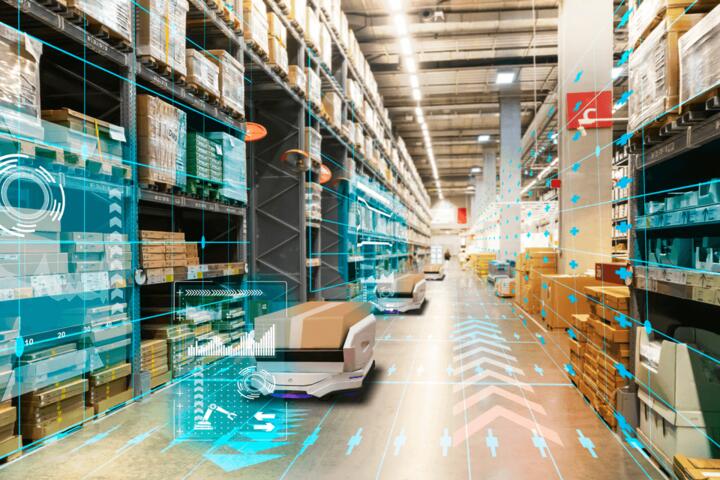
As we cast our gaze to the horizon, the future of inventory management system software is poised to witness riveting innovations, further revolutionizing the industry. Emerging technologies like blockchain offer the promise of immutable and transparent inventory records, enhancing traceability and trust across the supply chain. Autonomous inventory robots may soon become commonplace in warehouses, executing tasks with precision and efficiency that humans can only aspire to. These robots could drastically reduce human error and provide real-time data updates across systems. Moreover, as sustainability becomes a driving force in business operations, inventory systems may incorporate environmental analytics, allowing companies to minimize waste and monitor their carbon footprint actively. These forthcoming trends inspire not only optimism but also a sense of curiosity about how technology will continue to transform the intricate world of inventory management.
In conclusion, inventory management software is no longer a mere tool but a cornerstone in the edifice of modern business operations. The journey from manual record-keeping to integrated digital solutions illustrates a transformative narrative wherein technology continues to unlock new possibilities. As we've seen, today's systems offer more than inventory oversight: they are the catalysts for strategic decisions and enhanced operational efficiency. With emerging technologies on the horizon, the possibilities for future advancements are boundless. Businesses that embrace this evolution will not only revolutionize their operations but also lead the charge into a future where innovation knows no bounds. As we ponder the future of inventory management systems, we are left with a pertinent question: In a world driven by ever-evolving technology, what new leaps await us in the grand saga of inventory management?